
About Gary Wilkes

I have more than 35 years experience working with people and dogs. I have worked at the highest levels of competence and difficulty with real world behavioral control. A big part of my passion is the 8 years I spent in shelters, where killing unwanted animals was a big part of the job. Most of those owners would have kept the dog if simple solutions had been offered to them. At the time I didn't have anything to offer but a kennel and a two in ten chance of adoption. Now I have the solutions. I had to build them myself because those who claim to want solutions to the humane tragedy haven't bothered to. If I make a statement, it's based on more than 25 years experience with thousands of dogs. If it's speculation, I'll tell you. My goal is to provide information you can take to the bank. I hope you like the offering.

Aversive Control: A biological and evolutionary perspective. Part 2.

(Note: Part 1 is here… http://clickandtreat.com/wordpress/?p=388)

To refresh your memory about the topic, I have presented a case for the idea that punishment is innate in humans and a key survival behavior of both individuals and groups. For millions of years this fact has not been questioned.

Continue reading

Aversive Control: A biological and evolutionary perspective. Part 3

MousetrapNow that we’ve laid out the foundation for the topic it’s time to talk about specifics. First and foremost I have to clear up a widely held fantasy. Training is not the only situation where your dog might experience some fear inspiring or painful events. People who predict dire consequences from using aversive control in training seem ignorant of this fact. Scary and often painful events are part of life. Dogs are built to deal with it. Some of those events change a dog’s behavior and sometimes – like a vet performing a terrifying and/or painful procedure – they simply have to bite the bullet.
Continue reading

Aversive Control: A biological and evolutionary perspective. Part 4

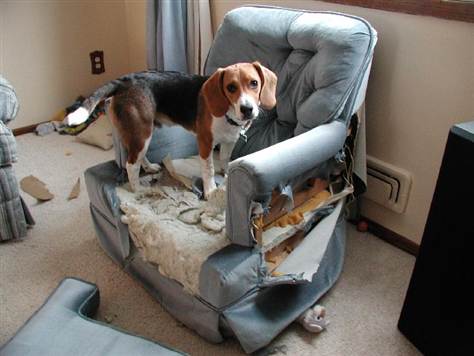
070418_21621_trail4_ug.grid-6x2Whether you like it or not, the deal-breakers for most dog owners revolve around ending an unacceptable behavior. If you can stop it, the owner will be more likely to deal with lesser, nuisance behaviors and regain their desire to keep the dog. EG: The mother who worked extra hours to buy new shoes for her kid isn’t going to laugh off the dog ripping them to shreds. If next week it’s a huge hole in the couch and then the dog knocks over a neighbor-kid it’s likely to kill her patience. If the dog goes to a shelter there is an 80% chance it will kill the dog, too. Modern dog people and behavior experts are cold to this. Continue reading

Aversive Control: A biological and evolutionary perspective. Part 5

The ancient Romans had a saying that behavioral scientists and modern dog trainers don’t seem to get. Abusus non tollit usum – theR3H abuse of a tool is not an argument against its proper use. To truly compare reinforcement and punishment means you examine both tools used correctly. That is rarely done. Instead, a biased and illogical perspective is presented that confuses people and blocks treatment known to be effective while fostering treatment known to cause problems. Meaning most “all positive” behaviorists talk out of both sides of their mouths. Here’s how that happens…
Continue reading

Aversive Control: A biological and evolutionary perspective. Part 6

As I ended Part 5, I said this –

“The real problem is the use of one effect, positive reinforcement, to increase behaviors and the complete absence of punishment – the effect that stops behaviors.” So, now, take a look at these people. They have something in common.

elvis_fat_left Britney Spears634.Lilo.Mug10.mh.112912atnsck

FILES-CUBA-CASTRO-OPINION9aBust ofidi_amin_dada     At this stage in the conversation I am going to assume that if you are still on board, that point is inarguable. When you put an organism on a life-road that is always rosy you get problems. First, as positive reinforcement cannot inhibit or stop behaviors any behavior is capable of becoming exaggerated to the point of disaster. I will give you some examples of people who at some point in their life never heard the word “NO” or suffered any tangible punishment. Here’s our first irony. Any reference to punishment in public almost always includes the word ‘suffer’ – even though the real suffering is caused by a lack of punishment. So, here goes – my rogues gallery of people who lived in an “all positive” world.
Continue reading